
Quick verdict
| Condition | Status |
|---|---|
| Product labelled “suitable for vegans” | ✅ Halal — plant-derived E471 confirmed |
| Halal-certified product | ✅ Halal — source independently verified |
| No vegan/vegetarian label, no halal cert | ⚠️ Mushbooh — source undeclared |
| Animal fat confirmed as source | ❌ Haram |
E471 is Mushbooh because it can come from plant oils (halal) or animal fats (haram), and labels do not specify which. The vegan label is the fastest fix.
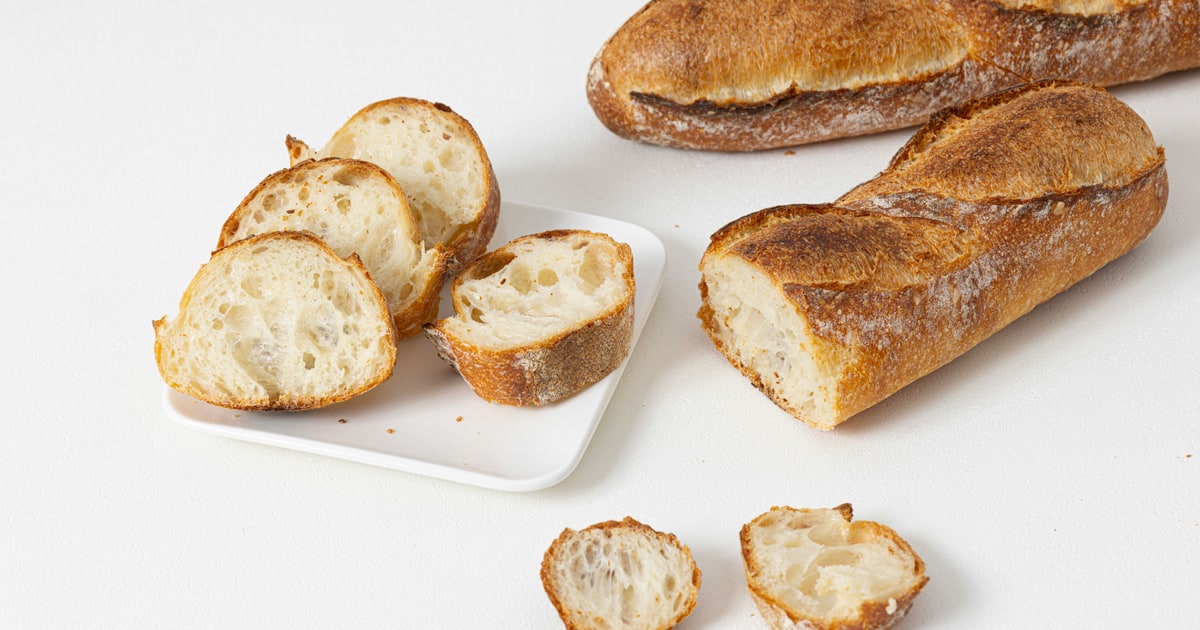
Bread is one of the most basic staples on the British Muslim table. Most households buy it weekly from a major supermarket, often without a second glance at the ingredients list. Yet a single additive — E471 — creates genuine uncertainty about whether that everyday loaf is permissible.
What E471 Actually Is
E471 is the food additive code for mono- and diglycerides of fatty acids. It functions as an emulsifier, meaning it helps fat and water mix together in a dough that would otherwise separate. In commercial bread production, E471 improves the crumb texture, keeps the loaf soft for longer after baking, and extends shelf life — all things that matter enormously to industrial bakeries producing millions of loaves per week.
The additive itself is not inherently haram. The halal status depends entirely on one question: where do the fatty acids come from?
Fatty acids used to make E471 can be sourced from:
- Plant oils — palm oil, soya oil, sunflower oil, rapeseed oil — all halal
- Animal fats — beef tallow or pork lard — haram unless the animal was slaughtered according to Islamic rites
This is the core of the problem. Both types of E471 are chemically identical in their final form. A food scientist cannot distinguish plant-derived E471 from pork-derived E471 by looking at the compound. The only way to know is to trace the supply chain back to the raw material.
Why UK Bread Labels Don’t Tell You Enough
UK food labelling law requires manufacturers to list E471 as an ingredient. It does not require them to specify the source of the fatty acids. This means the label on your bread will simply say “emulsifier (E471)” or “emulsifier (mono- and diglycerides of fatty acids)” — with no information about whether those fatty acids came from a palm plantation or a pig.
Some manufacturers use entirely plant-based emulsifiers, particularly as vegan product ranges have grown. But the standard commercial bread lines from the UK’s biggest brands are a different story.
The Major UK Bread Brands and E471
The following brands list E471 in some or all of their mainstream bread products:
Warburtons — The UK’s largest bread brand. Their Toastie, Medium Sliced, and Thick Sliced white loaves all contain E471. Warburtons has not confirmed plant-only sourcing for E471 across their standard range. They do produce some products with vegan labelling, which would use plant-derived emulsifiers.
Hovis — The Soft White Thick Sliced and similar products contain E471. Hovis has not held halal certification for their bread range. Like Warburtons, their vegan-labelled lines are the safer option.
Kingsmill — Their soft white loaves contain E471. Kingsmill similarly does not provide halal certification or plant-source confirmation for their standard lines.
Roberts Bakery — Listed as containing E471 in certain products. Again, no halal certification for the standard range.
It is worth emphasising that not all products from these brands contain E471. Simpler recipes within their ranges, or sourdough and artisan bread lines, may not include it. Always check the ingredients list on the specific product you are buying, as formulations change.
The Mushbooh Ruling on Undeclared-Source E471
When the source of E471 is undeclared and the manufacturer does not hold halal certification, the additive falls into the mushbooh (doubtful) category under Islamic food jurisprudence. Some scholars and halal certification bodies treat undeclared E471 as haram by precaution. Others take the position that since plant-based E471 is now more commercially common due to vegan demand, the probability of it being plant-derived is higher than it once was.
The safer approach — and the one recommended by most UK halal certifiers — is to treat undeclared-source E471 as doubtful and avoid it unless a trustworthy halal certification is in place.
How to Find Genuinely Halal Bread
The vegan label shortcut — Bread labelled “suitable for vegans” cannot contain animal-derived ingredients. Any E471 used in a vegan product must be from plant sources. This is the quickest check you can do in a supermarket. Warburtons, Hovis, and others produce vegan-labelled lines.
Halal-certified bakeries — Many cities with substantial Muslim populations have local bakeries with halal certification. These use halal-certified ingredients throughout, including any emulsifiers. A halal-certified loaf removes any doubt about E471.
Simple ingredient bread — Traditional bread requires just four ingredients: flour, water, yeast, and salt. Some product lines, particularly from smaller bakeries or supermarket own-brand “simple” ranges, stick close to this formula. No emulsifiers means no E471 concern. Check the ingredient list — if you see “flour, water, yeast, salt” and nothing else, you are fine.
Artisan sourdough — Real sourdough bread is made using a slow fermentation process that naturally develops texture without emulsifiers. The extended fermentation means E471 simply is not needed. Genuine artisan sourdough (not commercial “sourdough flavoured” products) will rarely contain E471.
E471 in margarine and spreads
Margarine is one of the highest-risk products for E471. Most commercial margarines contain E471 as an emulsifier to achieve their smooth, spreadable texture. The major UK brands — Flora, Stork, Lurpak Lighter, and supermarket own-brand spreads — all contain E471 in standard formulations.
Some Flora products carry vegan labelling, which confirms plant-derived E471. Lurpak standard (which contains dairy butter) cannot carry a vegan label, making the E471 source unconfirmed. For any margarine without a vegan label or halal certification, treat E471 as Mushbooh.
The practical rule for margarine: Buy the vegan-labelled version of a brand if available, or look for halal-certified alternatives at specialist retailers.
E471 in biscuits and cakes
Commercial biscuits and cakes routinely contain E471 as a fat-based emulsifier. It improves texture, extends shelf life, and helps create the melt-in-the-mouth quality of commercial biscuits.
Brands that frequently use E471 in their standard biscuit ranges: McVitie’s Digestives, Hobnobs, Rich Tea; Fox’s; Maryland Cookies; Cadbury biscuit bars. The biscuit category is one of the least likely to have vegan labelling (because most biscuits contain butter or dairy), meaning the E471 source is frequently unconfirmed.
The exception: vegan biscuit ranges (which have grown significantly since 2020) must use plant-derived E471. Lotus Biscoff, Oreos, McVitie’s Vegan Digestives — these carry vegan labelling and their E471 is plant-based.
E471 in ice cream and dairy desserts
Ice cream uses E471 as an emulsifier to prevent ice crystals forming and create a smooth, creamy texture. Major UK ice cream brands including Ben & Jerry’s, Häagen-Dazs, Carte d’Or, and supermarket own-brand ice creams contain E471 in most of their standard flavours.
The dairy content in ice cream prevents most products from carrying a vegan label, which means the E471 source cannot be confirmed by that route. Without halal certification, ice cream containing E471 is Mushbooh.
Some non-dairy ice creams (Ben & Jerry’s Non-Dairy, Alpro desserts) still contain E471 even in their plant-based formulations. Check per-product — the dairy-free status does not automatically resolve the E471 question.
E471 in FAQ schema
For anyone researching E471 across products: the rules are the same regardless of the food category. The vegan label confirms plant-derived E471 in any product. Without it, Mushbooh applies.
| Product category | E471 present? | Safe check |
|---|---|---|
| Bread (commercial sliced) | Often | Vegan label or halal cert |
| Margarine / spreads | Almost always | Vegan label |
| Biscuits / cookies | Often | Vegan label |
| Cakes / pastries | Often | Vegan label or halal cert |
| Ice cream | Often | Halal cert (dairy usually prevents vegan label) |
| Chocolate | Sometimes | Vegan label or halal cert |
| Ready meals | Often | Halal cert |
The Question of E920 Alongside E471
While checking bread ingredients, also watch for E920 (L-cysteine), another additive used in commercial bread. E920 is a dough conditioner that may be derived from pig bristles or human hair — both impermissible. E920 and E471 sometimes appear together in commercial bread. Both carry source concerns, and both require the same answer: halal certification or vegan labelling.
Bread That’s Naturally Free of E471
For reference, these bread types typically do not require E471:
- Pitta bread (flour, water, yeast, salt) — simple recipe, no emulsifiers needed
- Chapati and roti (flour, water, salt) — traditional flat bread, no emulsifiers
- Naan from traditional recipes — though commercial naan products may include E471
- Genuine artisan sourdough — long fermentation replaces emulsifiers
- Rye bread — many rye loaves are made without emulsifiers
Practical Steps at the Supermarket
- Flip the loaf over and read the ingredients list — not just the front-of-pack claims.
- Check for “E471” or “mono- and diglycerides of fatty acids.”
- If E471 is present, look for a vegan label or halal certification logo.
- If neither is present, the loaf is mushbooh.
- As an alternative, pick up a loaf with a vegan label or look for a simple-ingredients product.
The British supermarket bread aisle is not as simple as it looks. But with a 30-second label check, you can make a confident and informed decision every time.
E-Code Quick Reference
| E-Code | Name | Halal Status |
|---|---|---|
| E471 | Mono- and diglycerides of fatty acids | Mushbooh (source-dependent) |
| E472e | DATEM (diacetyl tartaric acid esters) | Mushbooh (source-dependent) |
| E920 | L-Cysteine | Mushbooh/Haram (may be pig bristle) |
| E481 | Sodium stearoyl lactylate | Mushbooh (source-dependent) |
| E482 | Calcium stearoyl lactylate | Mushbooh (source-dependent) |
E471 also appears in baby food and children’s snacks. For the halal parent’s guide to E471 in infant products, see Is E471 in Baby Food Safe? and E Numbers to Avoid for Children.
Ingredients change. Be first to know.
Brands reformulate without warning. We track every E-code update and halal certification — one short weekly email.
Related Articles
 E-Code Guides
 Which Foods Contain E471? A Category-by-Category Halal Guide (2026)
E471 turns up in chocolate, biscuits, bread, ice cream, spreads, instant noodles and protein bars. Here is a category-by-category breakdown of where it hides and which certified alternatives exist.
 E-Code Guides
 Is E471 in Baby Food Safe? What Muslim Parents Need to Know (2026)
E471 (mono- and diglycerides) appears in baby rusks, formula, and cereals. Source is rarely disclosed. This guide explains the halal status and which UK brands contain it.
 E-Code Guides
 E481 (Sodium Stearoyl Lactylate): Why Your Bread May Be Mushbooh
E481 SSL is Mushbooh — the stearic acid in this bread emulsifier may come from animal fat. No disclosure on most UK bread labels.