
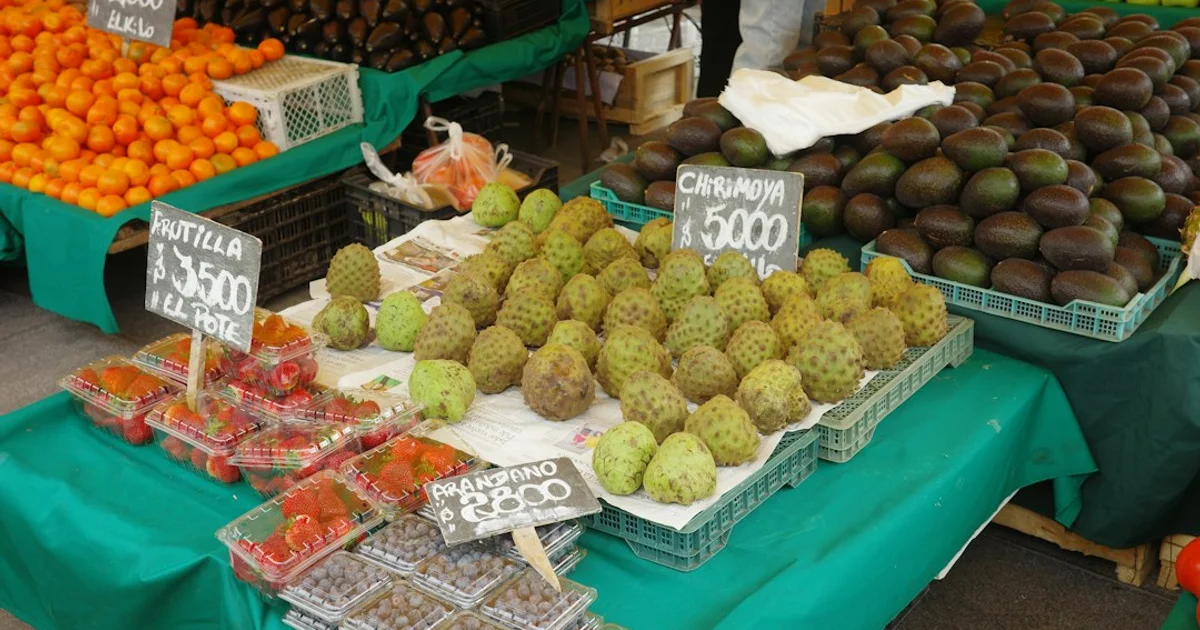
“Mandatory halal certification for everything” is how Indonesia’s October 2026 deadline is usually reported, and it is not what the law says. A crate of apples, a bag of plain almonds, a bottle of mineral water and a tub of zinc oxide do not need a certificate, and the rule that says so was signed on 31 August 2026.
That rule is BPJPH Head’s Decree 301 of 2026. It matters to exporters because it decides which products skip the certificate queue, and it matters to shoppers because it explains why some products on an Indonesian shelf carry no logo and are entirely within the law.
What the decree does
Decree 301/2026 implements Article 70 of Government Regulation 42 of 2024, the regulation that set the October 2026 deadline. Its stated purpose is legal certainty: a list of products and materials that may be used and sold without halal certification, provided they meet the criteria.
It replaces Decree 307 of 2025, which had brought frozen, dried and salted seafood and dried fruit into scope and drew objections from exporting countries. It was enacted on 31 August 2026, enters into force six months later, and carries a transition period from 18 October 2026 to 28 February 2027.
The nine criteria
A product or material qualifies for exemption when it is:
- Derived from nature, either unprocessed or with only minimal processing.
- At no meaningful risk of containing or contacting non-halal substances.
- Not from protected plants or animals.
- Not harmful to health, and free of narcotics, psychotropics and nicotine.
- Not prohibited under other laws and regulations.
- Classifiable by its characteristics, origin, properties, safety, how common its process is, and contamination risk.
- A single component (a single compound).
- Unchanged in origin by any processing it has undergone.
- Free of added substances, or containing only additions that do not affect critical halal points or contamination risk.
“Minimal processing” is defined generously: washing, peeling, cooling, freezing, cutting, drying, salting, grinding, blanching, heating, homogenisation, centrifugation, sieving, filtering, pressing, evaporation, sorting and fractional distillation all keep a product within the exemption. What breaks it is criterion 9: adding something else.
The seven exempt categories
| # | Category | Examples in the annex | Shopper’s translation |
|---|---|---|---|
| 1 | Plant-derived products and ingredients | Fresh fruit and vegetables, plain nuts, grains | Produce and single-ingredient plant foods |
| 2 | Products and ingredients from non-slaughtered halal animals | Milk, eggs, honey and similar, before anything is added | Animal products that involve no slaughter |
| 3 | Algae-derived products and ingredients | Seaweed, agar, carrageenan-type raw algae materials | Marine plant materials |
| 4 | Natural water | Spring, mineral and other natural water | Water |
| 5 | Chemicals and purified natural substances | Aluminium, zinc, magnesium oxide, zinc oxide, sodium chloride, silver | Single minerals and purified elements |
| 6 | Synthetic inorganic and organic chemicals not made by microbial fermentation | Pharmaceutical actives, synthetic dyes | Lab-made single compounds, provided no fermentation step |
| 7 | Others | Absorbent cotton, cellulose and derivatives, polyethylene, polyvinyl alcohol | Packaging and non-food materials |
Category 6 is the one with the sharpest edge. A synthetic chemical is exempt only if it was not produced by microbial fermentation, because fermentation introduces a growth medium that can be animal-derived. Citric acid made by fermentation on a plant substrate is the classic example of a material that looks like a simple compound and is not exempt on this criterion. Our E330 citric acid page explains why the growth medium is the halal question.
Where the exemption stops
Any added ingredient. The USDA’s example is nuts: roasted almonds are exempt; add salt, flavouring or honey and the product needs a certificate. The same logic runs through every category. Milk is category 2; flavoured milk is not. Dried mango is category 1; dried mango with added sugar and preservative is not.
Seafood. Decree 307/2025 had required certification for frozen, dried and salted seafood while exempting only fresh seafood. After engagement with exporting countries, the USDA reported in September 2026 that frozen, salted and dried seafood with no added ingredients no longer needs certification. Breaded, marinated or sauced seafood does.
Genetically engineered plant materials. They can sit within category 1 but must hold the food-safety approval that Indonesia requires for genetically engineered products.
Products made from haram materials. Pork products and alcoholic drinks are exempt from certification because they could never pass it. They must instead carry a non-halal statement on the pack, in the form set by BPJPH Regulation 3 of 2026.
Exempt is not the same as verified
The decree’s own commentary makes a point worth repeating: exemption from certification is not exemption from verification. BPJPH can ask a business to show process flows, composition and certificates of analysis to prove that a product really is the single-component, minimally processed thing it claims to be.
For a shopper the equivalent caution is simpler. An exempt product with no logo is lawful, but the absence of a logo on a processed product is not. If the pack has an ingredient list with more than one line, it is outside the exemption and should carry the Halal Indonesia logo or a non-halal statement.
Proposing a new exemption
The annex is not closed. A business or other stakeholder that believes a product or material meets the nine criteria but is not listed can apply, with supporting documents, to BPJPH’s Deputy for Partnership and Halal Standardisation through the Directorate of Halal Standardisation. The decree calls this a dynamic supplement mechanism. Expect the list to grow.
Quick checklist for an Indonesian shelf
- One ingredient, from nature, minimally processed? Likely exempt. No logo needed.
- Single mineral, element or non-fermented synthetic compound? Likely exempt.
- Anything added: salt, sugar, flavour, preservative, coating? Not exempt. Needs the logo.
- Made with pork or alcohol? Exempt from certification but must carry a non-halal statement.
- Processed product with neither logo nor statement after 18 October 2026? Non-compliant. Treat as uncertified and check the ingredients yourself.
Summary
| Question | Answer |
|---|---|
| What is Decree 301/2026? | BPJPH’s list of products and materials exempt from mandatory halal certification, enacted 31 August 2026 |
| When does it apply? | Six months after enactment; transition 18 October 2026 to 28 February 2027 |
| How many criteria? | Nine; the decisive ones are single component, minimal processing, nothing added |
| How many categories? | Seven: plant products, non-slaughter animal products, algae, natural water, purified chemicals, non-fermentation synthetics, others |
| Are fresh fruit and plain nuts exempt? | Yes; the exemption ends when another ingredient is added |
| Is frozen or dried seafood exempt? | Yes if nothing is added, per the USDA’s September 2026 reading; not under the earlier Decree 307/2025 |
| Does exempt mean halal? | No; it means no certificate is required. Pork and alcohol products are exempt too, with a mandatory non-halal label |
Look up any E-code on an Indonesian pack in the E-codes database.
To scan a full ingredient list for halal status in seconds, use the ingredient scanner.
For the system that certified products must run, see Indonesia’s SJPH explained; for the deadline itself, Indonesia’s October 2026 halal deadline.
How we reached this guide
We checked the following sources before publishing:
- BPJPH Head’s Decree No. 301 of 2026 on Products and Materials Exempt from the Halal Certification Obligation, via the Hukumonline legal database listing (enacted 30–31 August 2026; the database and the regulatory summaries differ by a day) and ChemRadar’s English regulatory summary: the nine criteria, the minimal-processing definition, the seven annex categories with examples, the transition period, the dynamic supplement procedure, and the verification caveat.
- Hukumonline Legal Brief, Issue 5643 (22 September 2026): nine criteria and seven product categories; legal-certainty purpose. Paywalled beyond the summary.
- USDA Foreign Agricultural Service GAIN report ID2026-0023 (21 May 2026): the predecessor Decree 307/2025 and its seafood and dried-fruit scope; roasted nuts exempt until another ingredient is added.
- USDA FAS GAIN report ID2026-0034 (14 September 2026): revised treatment of frozen, salted and dried seafood and dried fruit without added ingredients.
- BPJPH Regulation No. 3 of 2026: form and manner of the non-halal statement on products made from haram materials.
No product verdict is given in this guide. We have not read the decree’s annex in the original Indonesian and have described its contents from the regulatory summaries above; businesses should work from the official text.
Ingredients change. Be first to know.
Brands reformulate without warning. We track every E-code update and halal certification — one short weekly email.
Related Articles
 Shopping Guides
Indonesia's October 2026 Halal Deadline: What It Means for Importers and Shoppers
From 17–18 October 2026 imported food, drink, cosmetics and supplements sold in Indonesia must hold halal certification registered with BPJPH. BPJPH says no extension. What is covered, what is exempt, how foreign certificates count, and why more US brands now carry IFANCA marks.
 Shopping Guides
Vietnam's Five JAKIM-Recognised Halal Certifiers: What They Mean for Vietnamese Food in Malaysia
JAKIM's list effective 21 August 2026 recognises five Vietnamese halal certification bodies — HCA, HVN, VNH, VINAHIC and GHC — making Vietnam the third-largest source of recognised certifiers after Australia and Japan. Which logos count in Malaysia, and which do not.
 Shopping Guides
Malaysia and Indonesia's Joint Halal Council: What Changes First for Cross-Border Products
Malaysia and Indonesia launched a bilateral halal council on 25 September 2026, chaired by BPJPH with Malaysia as secretary-general. It builds on a 2023 mutual-recognition agreement already in force. What is actually recognised today, what the council adds, and what the ASEAN Halal Council planned for 2027 would mean.