
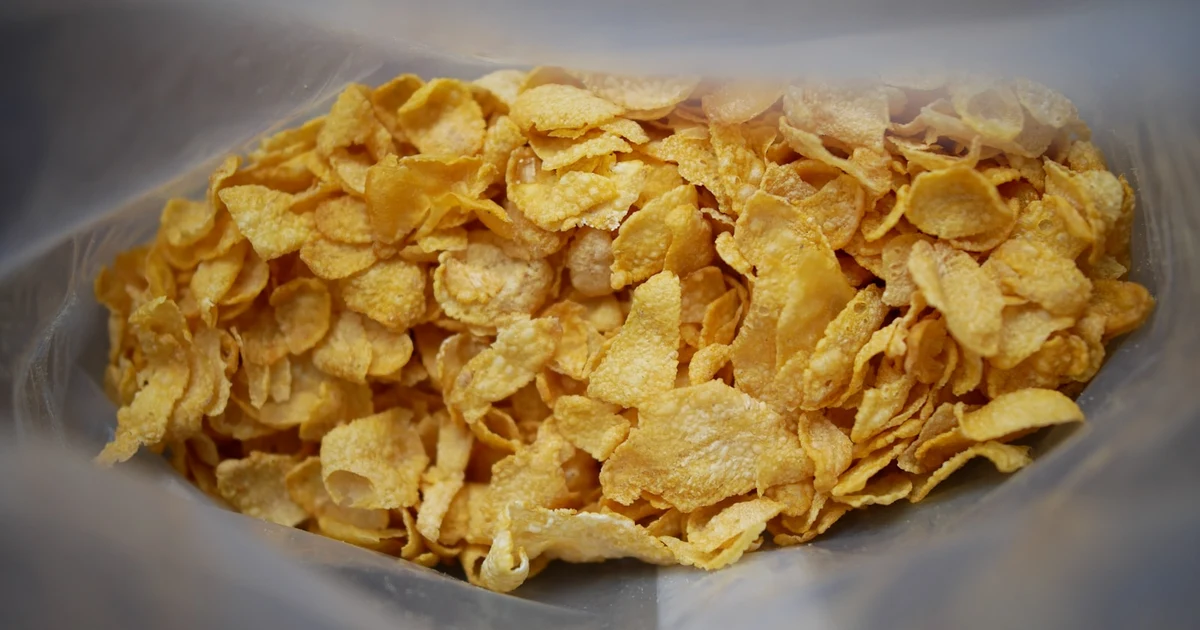
The verdict: Cheetos in the US and UK are Mushbooh — not halal-certified. US Crunchy, Puffs and Flamin’ Hot are on Frito-Lay’s made-without-pork-enzymes list, so the remaining doubt is undisclosed natural flavours, not pork; packs that list E631/E635 carry a source question too. Cheetos in the Middle East, Malaysia, and Pakistan are halal-certified.
Cheetos is among the most searched products on HalalCodeCheck. The answer is not a simple yes or no — it depends entirely on which country the pack was manufactured in and whether it carries a halal certification logo. This guide focuses on the three E-codes — E631, E627, and E635 — that drive the halal question for this product.
For a full brand-level breakdown of all Cheetos variants and markets, see the Cheetos brand guide.
The Core Ingredient Concern: Flavour Enhancers
Cheetos’ distinctive savoury, cheesy flavour comes partly from a group of additives called 5’-ribonucleotides — flavour potentiators that amplify the umami taste of the cheese seasoning. These are the additives that define the halal question for this product.
E631 — Disodium Inosinate
Status: Mushbooh
E631 is a flavour enhancer produced commercially from three possible sources:
- Fish (sardines, anchovies) — halal
- Pork — haram
- Bacterial fermentation of plant sugars — halal
In US snack manufacturing, pork-derived E631 is a common and cost-effective source. Frito-Lay does not disclose which source is used for Cheetos in the US or UK. Without that disclosure — and without independent halal certification — E631 cannot be cleared.
If you see E631 on any snack packet without a halal certification logo, treat the product as Mushbooh.
E627 — Disodium Guanylate
Status: Mushbooh
E627 is produced from yeast extract, fish (typically dried sardines), or animal sources. It is almost always used in combination with E631 — the two together are significantly more potent than either alone. The same undisclosed-source concern applies.
E635 — Disodium Ribonucleotides
Status: Mushbooh
E635 is simply a pre-blended mixture of E627 and E631. Where a manufacturer uses E635, all the concerns of both component E-codes apply simultaneously. Some UK and international Cheetos formulations list E635 rather than E627 and E631 individually — the halal concern is identical.
The rule is the same for all three: Without a halal certification logo on the pack, these flavour enhancers carry an unresolved animal-source uncertainty. That makes any product containing them Mushbooh at minimum.
US Cheetos: Not Halal-Certified
The entire US Cheetos range — Crunchy, Puffs, Flamin’ Hot, Twisted, and variants — is not halal-certified. The specific concerns for US products:
- Pork enzymes — cleared for the core flavours (correction, August 2026). Frito-Lay publishes U.S. Products Made Without Pork (Porcine) Enzymes (last updated January 2025). Its wording: porcine enzymes “are used to develop the cheese in some of our cheese seasonings”, and the list names the products that do not contain them — Cheetos Crunchy, Puffs, Flamin’ Hot Crunchy and Puffs, Simply White Cheddar are on it. The common claim that US Cheetos “contain pork enzymes” is therefore wrong for the flagship flavours. Flavours absent from the list (Cheetos Mac ‘n Cheese, Cheddar Jalapeño Puffs and others) are not cleared — Frito-Lay asks you to call Consumer Relations.
- E631 / E627 — the US panel for Crunchy, Puffs and Flamin’ Hot lists monosodium glutamate, not disodium inosinate; the ribonucleotide question applies to some flavoured variants and to other markets’ packs (see the E-code section above).
- Natural flavours — under US labelling law, “natural flavours” can legally include animal-derived components. Frito-Lay does not specify the source or carrier. This is the main open question on US Cheetos.
- Cheese powders — the cheddar and parmesan powders are not certified as halal-rennet cheese.
What Frito-Lay’s list is and is not:
- It is a manufacturer statement about one ingredient class — porcine enzymes — for named products. That is worth having, and it is Tier-1 evidence.
- It is not a halal certification: it does not cover flavour carriers, cross-contact, an audit, or the rennet in the cheese.
So US Cheetos Crunchy, Puffs and Flamin’ Hot are Mushbooh — ingredient-clean, uncertified: no pork, no gelatine, no alcohol on the label, one undisclosed line (natural flavours), no audit. That is a different, milder position than “may contain pork”, and this page said the latter until August 2026. Our US halal snacks guide lists the full Frito-Lay table.
UK Cheetos: Discontinued but Still Available
Cheetos were withdrawn from mainstream UK retail in the 1990s. However, imported US Cheetos and some international variants appear regularly in:
- Specialist American candy and snack shops
- Convenience stores in areas with large US-product imports
- Online marketplaces (Amazon, eBay, specialist retailers)
These imported products carry US-equivalent formulations with the same E631 and natural flavour concerns. There is no UK-specific halal-certified Cheetos product.
Middle East, Malaysia, Pakistan: Halal-Certified
PepsiCo and Frito-Lay manufacture Cheetos locally in several Muslim-majority markets. These are materially different products from US Cheetos:
| Market | Certification | Notes |
|---|---|---|
| UAE / Saudi Arabia | Local Islamic authority | Dedicated halal manufacturing facility |
| Egypt | Local Egyptian authority | Manufactured by Chipsy (PepsiCo subsidiary) |
| Malaysia | JAKIM | Full JAKIM halal certification |
| Pakistan | PHDEC / local body | PepsiCo Pakistan production |
In these markets, the flavour enhancers used in Cheetos are sourced from halal-confirmed or plant-based sources, and the manufacturing facility is independently audited.
A pack of Cheetos from Riyadh is a fundamentally different product from a pack of Cheetos from Chicago or London. The formulation, the sourcing, and the certification status are all different.
Regional Breakdown
| Region | Halal Status | Key Concern |
|---|---|---|
| US | Mushbooh | E631, natural flavours, no halal cert |
| UK (imported US) | Mushbooh | Same as US formulation |
| UAE / Saudi Arabia | Halal | Local certified production |
| Malaysia | Halal | JAKIM certified |
| Pakistan | Halal | Local halal certification |
| Egypt | Halal | Local certified production |
How to Check the Pack in Your Hand
- Look for a halal certification logo — on the front or back of the pack. Middle Eastern and Malaysian packs will carry the logo of the relevant certifying body.
- Check the country of origin — usually on the back near the barcode. “Made in USA” or “Made in UK” = no halal cert. Made in UAE, Saudi Arabia, Malaysia, Pakistan = likely certified.
- Check for E631, E627, or E635 — if present without a halal logo, the product is Mushbooh.
- Do not rely on the Frito-Lay “no pork” list as a substitute for halal certification.
E-Code Summary
| E-code | Name | Status | What it means |
|---|---|---|---|
| E631 | Disodium Inosinate | Mushbooh | Can be pork, fish, or plant-derived. Source not disclosed for US/UK. |
| E627 | Disodium Guanylate | Mushbooh | Same sourcing concerns as E631. |
| E635 | Disodium Ribonucleotides | Mushbooh | Blend of E627 + E631. Same concern as both. |
If the undisclosed enhancer source has put you off the US pack, be clear that nothing in our US snack guide is a cheese puff — this is a substitute, not a like-for-like swap. But Saffron Road’s IFANCA-certified crunchy chickpeas and the halal-certified Bruschette sour cream & onion chips answer the same crunchy-savoury craving with the certifying body behind them that Frito-Lay’s “no pork” list can never supply.
Summary
The halal status of Cheetos is entirely determined by where the pack was made and whether it carries a halal certification logo:
- US / UK Cheetos: Mushbooh — E631, natural flavours, no halal certification
- Middle East / Malaysia / Pakistan Cheetos: Halal — local certified production
The three E-codes to remember — E631, E627, E635 — are the reason. They are legitimate flavour enhancers that can come from halal sources, but without independent certification, the source cannot be confirmed from the label alone.
No halal logo on the pack = treat as Mushbooh.
- Full Cheetos brand guide — all variants, all markets
- E-codes database — look up any additive
- Scan your label — upload a photo to check every E-code instantly
How we reached this verdict
We checked the following Tier-1 sources before publishing this verdict:
- Halal certification bodies (HMC, HFA, JAKIM, MUI): Where the brand or ingredient appears in certified products, the certifying body’s audit covers source verification; where it appears in uncertified products, manufacturer disclosure is required.
- Manufacturer statements: Public ingredient lists, vegetarian / vegan suitability labels, customer-service correspondence on source disclosure.
- Sunni fatwa scholarship across the four madhabs:
- Hanafi-leaning bodies: IslamQA Hanafi, Darul Iftaa Birmingham, AskImam.org, Daruliftaa.com (Mufti Taqi Usmani), Wifaqul Ulama, Darul Iftaa New York.
- Shafi’i / Maliki-leaning bodies: NU (Nahdlatul Ulama, Indonesia), Dar al-Ifta al-Misriyyah (Egypt), e-fatwa.com (UAE), al-Azhar.
- Hanbali / Saudi-Salafi-leaning bodies: Saudi Permanent Committee for Scholarly Research, IslamQA Saudi.
Madhab note
The four Sunni madhabs broadly converge on the rules applied in this guide:
- Pork-derived sources — Haram across all four madhabs.
- Alcohol-based ingredients — Haram across all four madhabs.
- Source-ambiguous E-codes (E471, E476, E631, E627, E635, E920) — manufacturer plant-source disclosure (vegetarian-suitable label) is treated as sufficient under the Hanafi/Maliki/Shafi’i mainstream rule (Darul Ifta Birmingham, IslamQA case 245452); HMC-strict / Hanbali-leaning view requires formal independent certification.
- Istihāla (transformation) — Hanafi and Maliki accept istihāla strongly; spirit vinegar (alcohol → vinegar) is halal. Most Shafi’i scholars permit spirit vinegar specifically; some Hanbali scholars more cautious.
- Insect-derived dyes (E120 cochineal/carmine) — Hanafi, Shafi’i, and Hanbali generally treat as haram; some Maliki scholars permit small insects.
- Non-zabihah meat (Ahl al-Kitāb / People-of-the-Book slaughter) — Maliki and classical Shafi’i/Hanbali generally accept; Hanafi-Deobandi tradition more restrictive.
If your madhab differs on a specific ruling, the relevant section above flags the school-specific position. For binding rulings on borderline products, consult a competent scholar in your tradition.
Ingredients change. Be first to know.
Brands reformulate without warning. We track every E-code update and halal certification — one short weekly email.
Related Articles
 Shopping Guides
 Halal Protein Powder and Supplements in Sweden: What to Buy (2026)
Gainomax, MyProtein and Optimum Nutrition are popular in Sweden but none hold halal certification for the Swedish market. Here is what to check — and which options Swedish Muslims actually use.
 Shopping Guides
 Halal Ice Cream and Dairy in New Zealand: Tip Top Labels It, But Nobody Names the Certifier
Tip Top tags 24 of its 73 products halal certified on its own site and runs a separate gelatine-free filter. Kāpiti does the same. Neither names a certifier, and FIANZ publishes no dairy client list. Here is what that gap means for a shopper.
 Shopping Guides
 Halal Snacks in Turkey: Why Ülker Has No Logo and Lay's Türkiye Has No Certificate (2026)
In Turkey halal is the default, not a label — so most domestic snacks carry no helal mark and are still fine. The exceptions worth checking: Frito-Lay's Turkish-made Lay's and Doritos publish no product-level certificate, and imported European snacks bring pork and gelatine with them.