
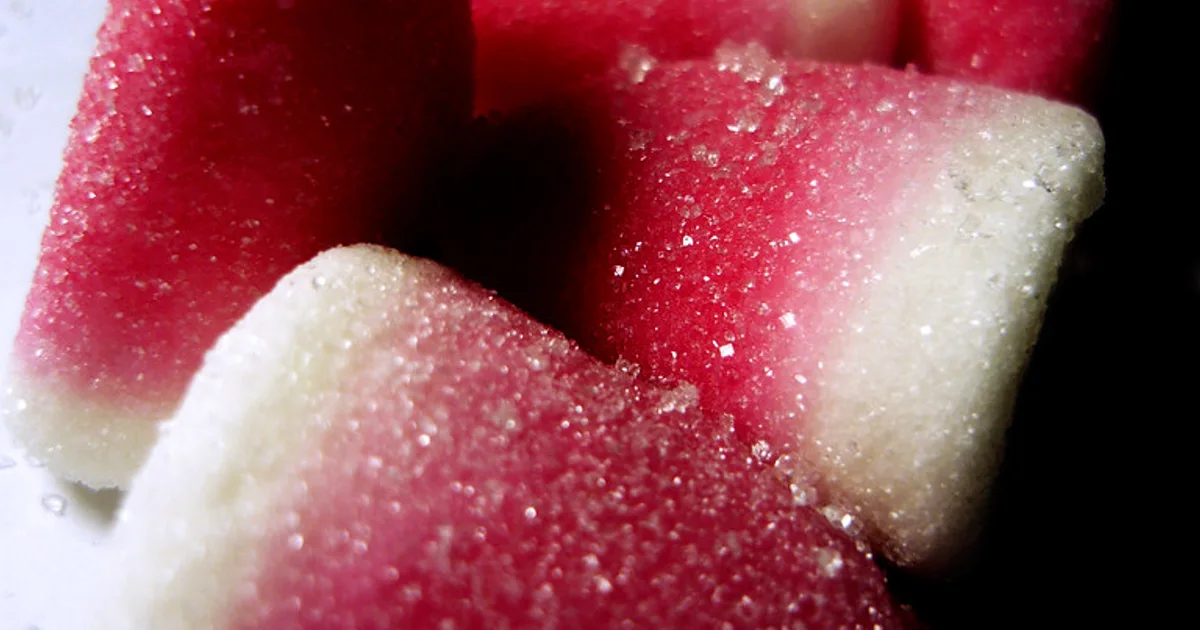
You pick up a chocolate or a bag of jelly beans and notice the shiny coating. That gloss could be shellac — a resin secreted by a type of scale insect.
E904 on a food label means shellac. It is one of the more controversial food additives for Muslim shoppers, because it comes from an insect rather than a plant or synthetic source.
What Is Shellac (E904)?
Shellac is a natural resin secreted by the female lac insect (Kerria lacca). The insect deposits the resin on tree branches in India and Thailand. It is harvested, processed, and dissolved in alcohol to form a liquid coating.
In food, shellac is used as a:
- Glazing agent on confectionery — gives hard-coated chocolates and sweets a shiny finish
- Surface coating on apples and citrus — as a wax alternative to extend shelf life
- Coating on pharmaceutical tablets — provides slow-release or enteric coatings
On UK/EU labels it appears as:
- E904
- Shellac
- Confectioner’s glaze
- Pharmaceutical glaze
- Natural glaze
Is Shellac (E904) Halal?
The majority scholarly position is that shellac is not permissible (haram), for two reasons:
-
Insect origin: Most mainstream Islamic jurisprudence holds that insects (other than locusts) are not halal to consume. Shellac is derived from insect secretion — even if the insect itself is not eaten directly.
-
Processing with alcohol: Shellac is typically dissolved in ethanol (alcohol) during manufacturing. The final product may retain trace quantities of alcohol.
| Criterion | Status |
|---|---|
| Source | Lac insect — majority ruling: not halal |
| Processing solvent | Alcohol — a further concern |
| Certifying bodies (HMC, HFA, JAKIM) | Generally exclude E904 from certified products |
| Minority scholarly view | Some permit it due to transformation (istihalah) of the insect origin |
A minority of scholars argue that because shellac undergoes significant processing that transforms its original form, it may be permitted. This is not the dominant position and is not adopted by major halal certification bodies.
Bottom line: avoid E904 if you follow mainstream halal guidelines.
Where Is E904 Commonly Found?
| Product type | Examples |
|---|---|
| Hard-coated chocolates | M&Ms, Smarties, some chocolate-coated nuts |
| Jelly beans | Jelly Belly, generic jelly beans |
| Coated confectionery | Some sugar-coated sweets, liquorice allsorts |
| Fruit (retail) | Waxed apples, lemons, oranges (particularly premium or imported varieties) |
| Pharmaceutical tablets | Enteric-coated pills, some vitamin supplements |
Note on M&Ms and Smarties: These products use confectioner’s glaze/shellac in some markets but carnauba wax (E903, plant-derived — halal) in others. Formulations vary by country. Check the ingredient list for the specific product you are buying.
How to Spot It
On a confectionery label, look for:
- E904 in the ingredients list
- “Glazing agent: shellac” or “Glazing agent: E904”
- “Confectioner’s glaze” — common on jelly beans and coated sweets
- “Natural glaze” — sometimes used; check if the source is stated
On produce (fruit), the wax type may be declared on a sign near the product rather than on the fruit itself. EU retailers are required to state whether fruit has been wax-coated.
Halal-Safe Glazing Alternatives
When a confectionery product does not use shellac, it typically uses one of these plant-derived alternatives:
| E-code | Name | Source | Halal status |
|---|---|---|---|
| E901 | Beeswax | Bee-produced | Debated — insect-derived, but widely permitted |
| E903 | Carnauba wax | Brazilian palm leaf | ✅ Halal |
| E904 | Shellac | Lac insect | ❌ Majority ruling: not halal |
| E905 | Microcrystalline wax | Petroleum | ✅ Halal |
Carnauba wax (E903) is the most common halal-acceptable glaze. Products certified by HMC, HFA, or JAKIM typically use E903 rather than E904.
Summary
| Detail | |
|---|---|
| E-code | E904 |
| Name | Shellac / Confectioner’s glaze |
| Source | Lac insect secretion |
| Halal status | Not halal — majority scholarly ruling |
| Also a concern | Processed with alcohol |
| On labels | E904, shellac, confectioner’s glaze, natural glaze |
| Safe alternative | E903 (carnauba wax) |
Check confectionery and coated sweets for E904, particularly items that have a shiny or hard-shell finish. If you see it listed, the product is not suitable under mainstream halal guidelines.
Search E904 in the E-codes database for the full technical entry, or scan a product label to check all additives at once.
How we reached this verdict
We checked the following Tier-1 sources before publishing this verdict:
- Halal certification bodies (HMC, HFA, JAKIM, MUI): Where the ingredient appears in certified products, the certifying body’s audit covers source verification; where it appears in uncertified products, manufacturer disclosure is required.
- Manufacturer statements: Public ingredient lists, vegetarian / vegan suitability labels, customer-service correspondence on source disclosure.
- Sunni fatwa scholarship across the four madhabs:
- Hanafi-leaning bodies: IslamQA Hanafi, Darul Iftaa Birmingham (Mufti Mohammed Haroon Hussain), AskImam.org (Mufti Ebrahim Desai), Daruliftaa.com (Mufti Taqi Usmani), Wifaqul Ulama, Darul Iftaa New York.
- Shafi’i / Maliki-leaning bodies: NU (Nahdlatul Ulama, Indonesia), Dar al-Ifta al-Misriyyah (Egypt), e-fatwa.com (UAE), al-Azhar.
- Hanbali / Saudi-Salafi-leaning bodies: Saudi Permanent Committee for Scholarly Research, IslamQA Saudi.
Madhab note
The four Sunni madhabs broadly converge on the rules applied in this guide:
- Pork-derived sources (pig fat, pig gelatine, pig-derived enzymes) — Haram across all four madhabs.
- Alcohol-based ingredients (intoxicants, residual fermentation alcohol that intoxicates) — Haram across all four madhabs.
- Source-ambiguous E-codes (E471, E476, E631, E627, E635, E920) — require source verification across all four schools; manufacturer plant-source disclosure (vegetarian-suitable label) is treated as sufficient under the Hanafi/Maliki/Shafi’i mainstream rule (Darul Ifta Birmingham, IslamQA case 245452); HMC-strict / Hanbali-leaning view requires formal independent certification.
- Istihāla (transformation) — Hanafi and Maliki accept istihāla strongly, so spirit vinegar (alcohol → vinegar) is halal. Most Shafi’i scholars permit spirit vinegar specifically. Some Hanbali scholars are more cautious on transformed haram products.
- Insect-derived dyes (E120 cochineal/carmine) — Hanafi, Shafi’i, and Hanbali generally treat as haram; some Maliki scholars permit small insects.
- Non-zabihah meat (Ahl al-Kitāb / People-of-the-Book slaughter) — Maliki and classical Shafi’i/Hanbali generally accept; Hanafi-Deobandi tradition more restrictive.
If your madhab differs on a specific ruling, the relevant section above flags the school-specific position. For binding rulings on borderline products, consult a competent scholar in your tradition.
Ingredients change. Be first to know.
Brands reformulate without warning. We track every E-code update and halal certification — one short weekly email.
Related Articles
 E-Codes & Additives
 Is L-Cysteine (E920) Halal? The Bread Additive With a Hidden Source
L-cysteine (E920) in bread can be derived from human hair, duck feathers, or synthetic production. Human hair source is haram. Synthetic E920 is halal. Here's how to tell.
 E-Codes & Additives
 Is Carrageenan (E407) Halal? The Seaweed Thickener Explained
Carrageenan (E407) is derived from red seaweed and is halal — no animal ingredients, no haram processing. Learn where it is used and why it is safe for Muslim shoppers.
 E-Codes & Additives
 Is E415 (Xanthan Gum) Halal? Yes - Here's Why
E415 (Xanthan Gum) is halal in the vast majority of commercial products. Learn what it is, where it comes from, and the one edge case worth knowing about.