

The aqiqah is one of the most significant food-centred events in Muslim family life — a gathering to celebrate a new life, fulfil a Sunnah, and share food with the community. Getting the food right means more than just using halal meat: it means checking every element of the spread. This guide covers the Islamic requirements, meat sourcing, what to serve, and the E-codes to check.
What Is Aqiqah?
Aqiqah is the practice of sacrificing an animal to give thanks for a new baby, ideally on the 7th day after birth. The Sunnah specifies:
- Two animals (goat, sheep, or equivalent) for a boy; one animal for a girl
- The animal must be free of defect
- The meat is divided: one portion for the family, one for friends and neighbours, one for those in need
- The baby’s head is shaved on the same occasion (optional but Sunnah)
- The child is given a name
If the 7th day is not possible, the 14th or 21st day are acceptable alternatives. If those pass, aqiqah can still be performed later — any age before adulthood, or by the individual themselves as an adult.
Sourcing the Aqiqah Animal
Option 1: Aqiqah service Specialist aqiqah services handle the entire process — sourcing a healthy animal, performing the halal slaughter with proper recitation, processing the meat, and sometimes arranging distribution to those in need. Search for “aqiqah service [your city]” to find local providers. In the UK, services operating out of Birmingham, Bradford, and London are well established.
Option 2: Halal butcher A trusted certified halal butcher can source and slaughter the animal on your behalf. Ask specifically:
- Is the animal healthy and free of defect?
- Will the bismillah and the sacrifice be performed correctly?
- Can you confirm the certification?
Option 3: Overseas aqiqah Many Muslim families arrange aqiqah in countries where the cost is lower and distribution to those in need is easier — Pakistan, Bangladesh, Morocco, Somalia, and similar. Services operate online and can arrange this remotely. Ensure the service is from a reputable organisation rather than an unverified online listing.
The Aqiqah Gathering: What to Serve
Aqiqah gatherings vary by culture — South Asian families typically serve biryani; Arab families may serve mansaf or kabsa; African families may serve jollof rice or roasted meat. There is no set menu required by Islamic law — the requirement is that the meat used is halal.
Core dishes (typically halal by nature):
- Biryani (lamb, goat, or chicken — confirm halal meat)
- Rice and curry (daal, aloo gosht, or similar — confirm halal meat)
- Mansaf (lamb in jameed sauce — Jordanian tradition)
- Kabsa (rice and meat dish — Gulf tradition)
- Roasted lamb or goat on the bone
- Grilled halal chicken
Side dishes and accompaniments:
- Salads — halal with no concerns
- Raita (yoghurt sauce) — halal
- Chutney — halal in most forms; check commercial chutneys for E-codes
- Pickles — typically halal; check vinegar type (malt and white wine vinegar are halal)
- Flatbreads and pitta — check commercial versions for E471; homemade is clean
Desserts: What to Check
Aqiqah desserts are typically traditional sweets from the family’s cultural background. Common E-code concerns:
Gulab jamun: Traditional recipe (milk powder, flour, ghee, sugar syrup) is halal. Commercial packaged gulab jamun may contain E471 — vegan label confirms plant source.
Barfi and mithai: Milk-based sweets are typically halal. Some silver leaf (varak) decoration on traditional Indian sweets has historically used animal-derived gelatin in manufacturing — this has become much rarer but is worth noting for strict observance.
Jelly-based desserts: If serving jelly or any set dessert, use halal beef gelatine or agar-agar as the setting agent. Standard supermarket jelly crystals (Hartley’s, Green’s) use porcine gelatine.
Cake: See the wedding cake section of our halal wedding food guide for a full breakdown of fondant, fillings, and decorations.
Shop-bought dessert platters: If ordering desserts from a caterer or supermarket, confirm:
- No gelatine from non-halal sources in mousses and panna cottas
- No alcohol in tiramisu, trifle, or filled chocolates
- E120 (carmine) absent from red/pink desserts
Drinks
Water and soft drinks are always appropriate. Fruit juices, sparkling water, and cordials are halal. Avoid serving kombucha (fermented, contains trace alcohol) or any energy drink you have not checked.
Quick Aqiqah Catering Checklist
| Category | What to Confirm |
|---|---|
| Aqiqah animal | Certified halal, free of defect, bismillah at slaughter |
| All meat served | From halal-certified source |
| Cooking sauces and stocks | No alcohol; halal-certified or vegetable-based |
| Desserts | Gelatine from halal source or agar-agar; no alcohol |
| Commercial pastries | Vegan label for E471 peace of mind |
| Jelly or set desserts | Halal beef gelatine or agar-agar only |
| Drinks | Non-alcoholic throughout |
Ingredients change. Be first to know.
Brands reformulate without warning. We track every E-code update and halal certification — one short weekly email.
Related Articles
 How-To Guides
 Halal Wedding Food Checklist 2026: What Caterers and Guests Must Know
Everything to check at a Muslim wedding — from catering requirements and meat sourcing to E-codes in the wedding cake and buffet. A practical guide for hosts and guests.
 How-To Guides
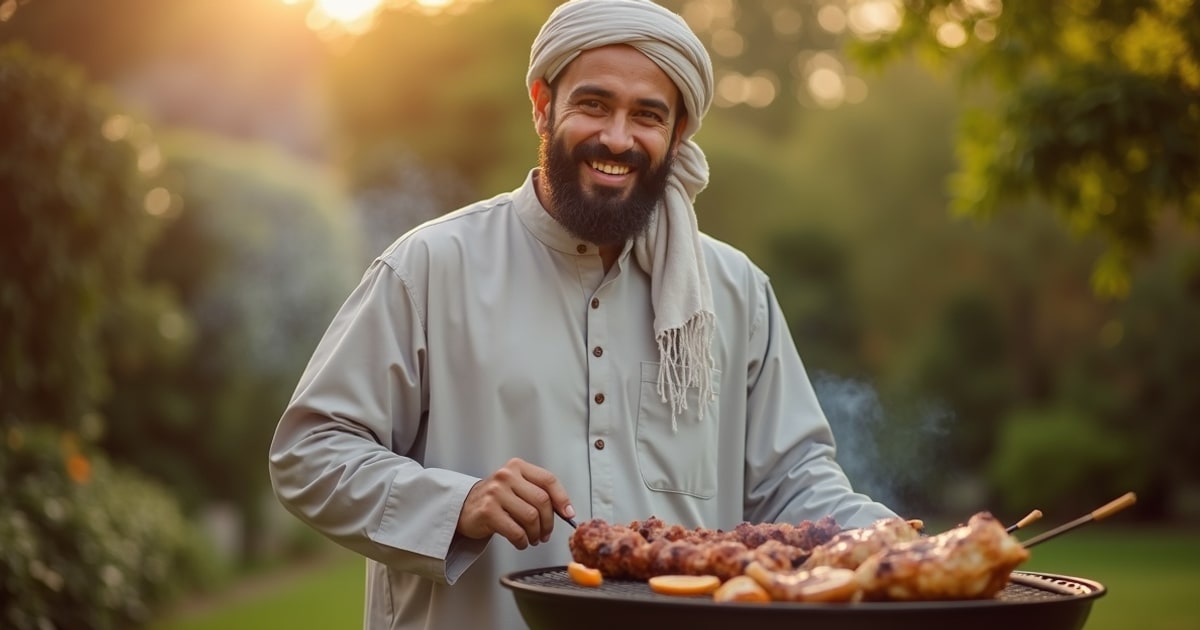
 Halal Father's Day BBQ Guide 2026: Sausages, Sauces and E-Codes
Planning a Father's Day BBQ for a Muslim family? This guide covers which sausages and burgers are halal, E-codes to watch in marinades and sauces, and what to avoid.
 How-To Guides
 Halal Mother's Day Food Guide 2026: Afternoon Tea, Chocolate and What to Check
Planning a halal Mother's Day treat? This guide covers E-codes in afternoon tea, which chocolate boxes are halal, and what to check in cakes and confectionery.